
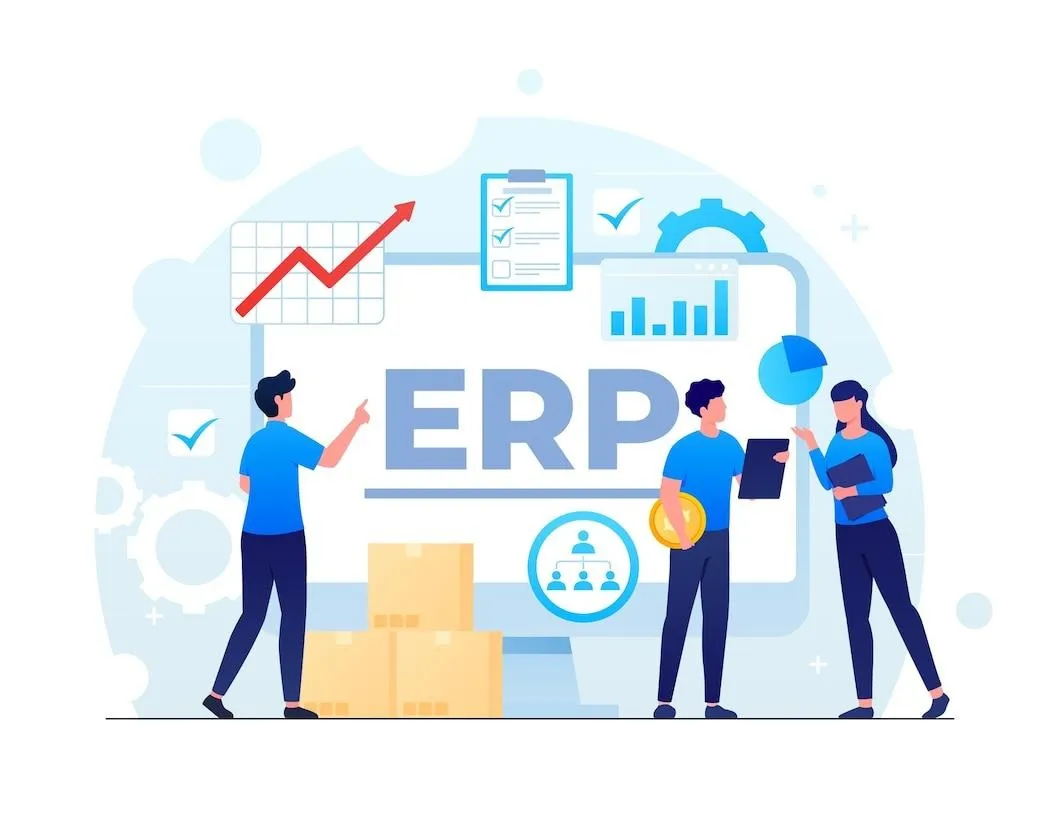
In every organization, there is usually one person or system responsible for managing different operations. This process can become overwhelming, time-consuming, and full of errors, causing major downtime. Enterprise Resource Planning (ERP) project management provides a central system that helps organizations manage stocks, inventory, accounting, employee records, sales, customer orders, supply chain, and logistics. All these operations can be handled through a single ERP software system. It improves enterprise resource planning systems by aligning them with business goals. Here is a look at how ERP project management improves the efficiency of organizations.
1. ERP-Optimized Business Workflow
Enterprise Resource Planning (ERP) is a central digital system for a business that manages all operations from one platform and acts as a bridge among different departments. With ERP, businesses can coordinate resources, meet project requirements, and manage timelines effectively. It allows open communication among stakeholders to reduce errors, inconsistencies, and inefficiencies within the organization. Through timely risk management, businesses can avoid challenges such as cost overruns, delays, and system integration issues. Whether an organization wants to upgrade an old digital system or implement a new ERP solution, erp project management services support sustainable business growth over time.
2. Better Data Coordination
One major challenge for any business is the management of data silos. Whether it is a small-scale or large-scale business, most data remains scattered across different departments and sectors. This scattered data often causes miscommunication and inefficiencies, leading to downtime and financial loss. ERP software can centralize all data into a single source. With this system, organizations can monitor data in real time so that managers, executives, and employees can respond to trends and market demands while making informed decisions. The software also provides instant access to required data, allowing employees to perform tasks more efficiently.
3. Operational Efficiency and Automation
Businesses must remain competitive in a constantly changing market. They need to eliminate repetitive manual processes that often cause delays. ERP software helps businesses monitor repetitive tasks such as inventory records, financial management, payroll processing, and order tracking. This allows operations to run smoothly and accurately through an automated system. ERP software also supports digital workflows, organized record management, and AI-powered insights to strengthen business operations.
4. Financial Management and Compliance
One major responsibility businesses face every year is preparing taxes, managing cash flow, ensuring compliance with tax regulations, and avoiding future penalties. By implementing ERP software, businesses can maintain accurate financial records such as bookkeeping, payroll, financial reporting, and budgeting. Organizations can also monitor tasks such as entity selection, restructuring, and employee benefit planning. ERP software simplifies financial management, supports daily transactions, and helps businesses plan effectively for future expansion.
5. Stronger Customer Relationships
ERP software is an effective tool for strengthening customer relationships with a brand. Customer Relationship Management (CRM) becomes easier through this enterprise-level technology, allowing businesses to launch campaigns, discounts, sales promotions, and voucher packages to improve customer experience. This allows users to discover brand specialties through various digital channels. With easy ordering and transaction options, customers can select their desired products and make payments seamlessly. This creates a smooth and efficient process from start to finish.